I would like to start off by apologizing for my three year hiatus from the blog. It is difficult to begin a media platform when also starting a family. This being said, I am going to be posting more often as an outlet of expression of myself. The site will be making a slight turn in content and serve as a sort of online journal for the notation of my thoughts, feelings and ongoing projects.
I am also using the platform to test various styles of writing (i.e. interviews, guides, reviews and personal thoughts/hot takes), to get a better sense of the type of content I would like to post in the future. That being said I will continue to use an informal writing style for the foreseeable future, as I believe it is more comfortable to myself and hopefully to the reader. I may jump back and forth between 1st, 2nd and 3rd person in my writings, but will attempt to stick with writing in one point of view per article. That being said, should I jump between 1st, 2nd and 3rd person point of view in an article, it is because I do not have the time to or/nor I do not want to make the effort to reroute and retype my thoughts. I want to give a more raw interpretation of my thoughts, as I find that to be more expressive of my true self.
I’ve rambled enough for one article. Now it is time to get into the meat of what I am wanting to write – an information dense collaboration of my thoughts and research.
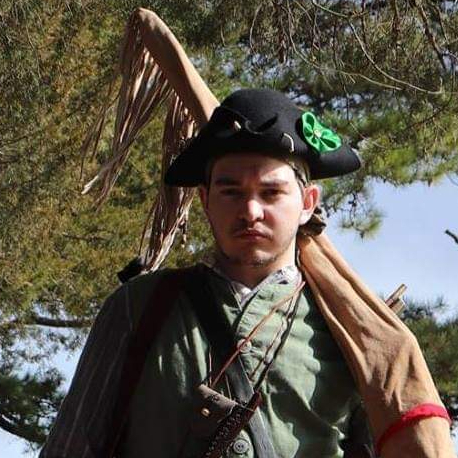
It was a successful season of living history for me, and I feel I have grown as in previous years. For those who don’t know, I demonstrate the techniques of an 18th century blacksmith. I am consistently working towards building my skill, and feel like I’ve learned quite a bit in the past year, through practice and frustration.
One common issue I struggled with is in the explanation that my equipment is not correct to the time period I portray. I use a late 19th century rivet forge and an early 20th century anvil. The reason for this, is the lack of availability of colonial pattern anvils, as well as being cost prohibitive when available. I have researched the concept of a traveling forge and the only information I have found is the existence of British calvary forges that were attached to artillery units at the time. I portray a French Habitant living in New France. In order to continue portraying a colonial blacksmith in New France, I must do one of the following:
- Continue to use the equipment I have, while continuing to explain that some of the equipment I have is not correct to the time period (although the techniques demonstrated are).
- Build a cavalry forge for use at events, even though they were not accessible to a habitant in New France.
- Build a portable forge that looks like a permanent forge.
- Build a portable firebox utilizing 18th Century knowledge and style.
Option 1 is what I have been doing over the course of a year and a half. This option to me is not sustainable, and is the cause of my decision to begin to research a more correct example of a portable forge. Option 2 would provide a great display, and would be a great example of a piece documented to this time period. The major barriers to me with this option are mostly cost related. Purchasing (or manufacturing) and maintaining wheels for such would be cost prohibitive. I also do not have adequate storage for a calvary forge. I also run into the issue of the piece not being documented to the subject that I portray. Option 3 is enticing, as the most accurate representation of a forge that I could present would be a permanent forge in a set location. This is not viable due to the fact that I do not frequently demonstrate in the same location. My fear is that any attempt to create a portable version of this would either be: too heavy, too large or too gimmicky. Whatever choice I make has to be a genuine article and representative of my own personal goals.
I arrive at Option 4. My conclusion is that for the cost and in order to have something functional and genuine, I must build a clay firebox that is portable in nature and by design. This would be a compact option that I can move and store.
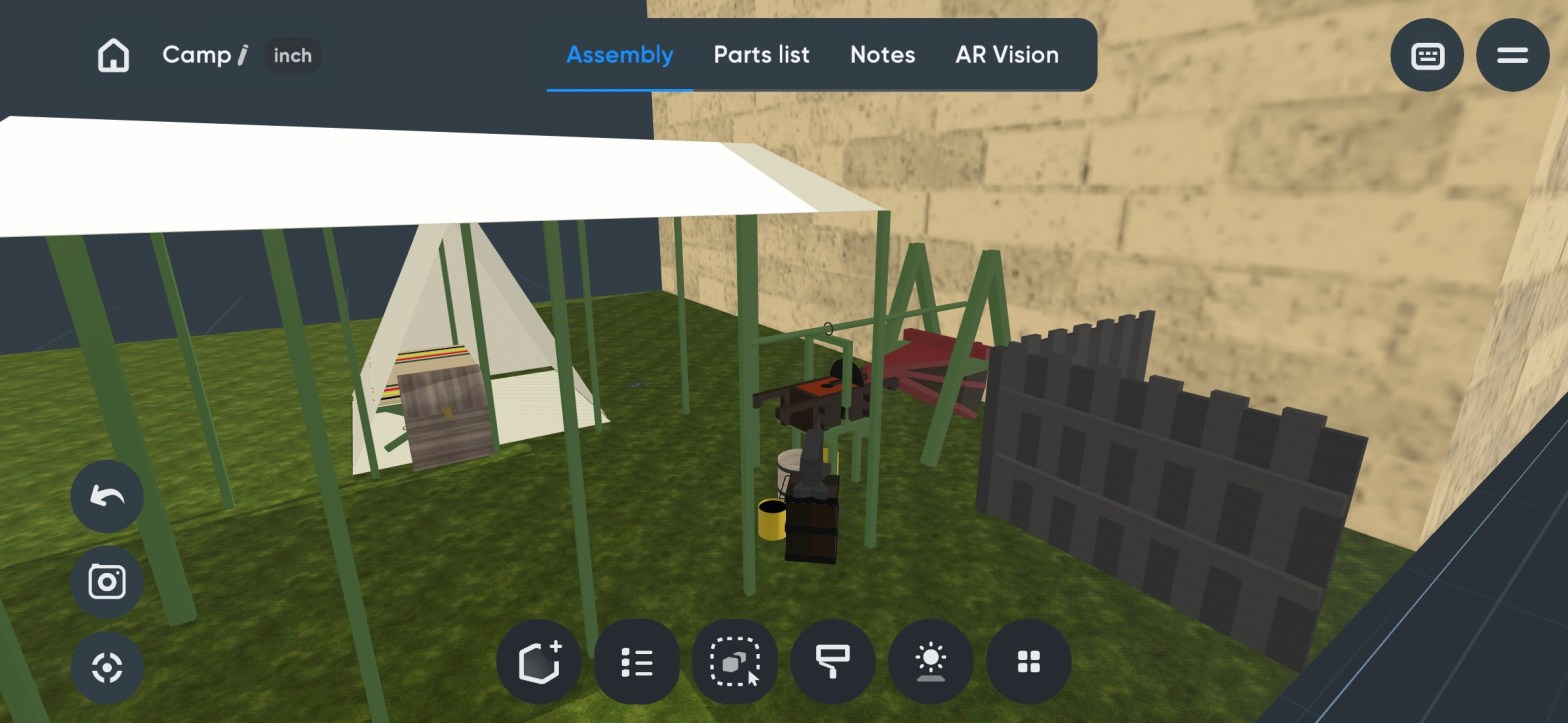
My plan is to build the firebox of wood, and give it a clay lining. Options 2-4 involve building a great bellows of wood and sheepskin or leather, so I planned on doing that as well. I plan on following the Townsend guide on YouTube, as well as finding more documentation on that subject myself. I will follow up on the construction of the bellows in a later post.
At the close of the living history season in mid-late October (most of the events I currently set up at run from April to October), I began to plan my winter projects. I took a deep dive into A Diderot Pictorial Encyclopedia of Trades and Industry Volume One and Volume two edited by Charles Gillepie. I began compiling information from the plates by Denis Diderot to document examples of 18th century wood work. I found multiple instances of a box with handles, designed to be carried by two men. This portable box is the base for which I am designing my forge.


I only have one photograph, but there is a recurring box in the plates from Diderot’s encyclopedia. This will serve as the vessel that contains the clay that will form the firebox of my forge. My mission is to build a box in 18th century form. The function of the box displayed in these plates is to transport various materials. I would like to use 18th century techniques and tools to build the box, but due to time constraints, I will probably be using modern tools.

I apologize for the partial image. I took this picture for a reference before I had decided to revisit my blog. The next time I have access to the pictorial of Diderot’s encyclopedia, I will try to get the full plate to include as well.
If you have any comments or concerns about the content of this blog, please reach out to me using the contact page.
 The Historical Hillbilly